And so, JPI Oceans’ new Strategy Framework was launched. Spanning the 2026 to 2030 period, it confirms the organisation’s mission, refines its vision, and sets out a structured approach for delivering impact on the European and global ocean research landscapes.
Presented on 4 December 2025 at the European Parliament, under the patronage of MEP Paulo do Nascimento Cabral, the Framework comes almost fifteen years after the establishment of JPI Oceans, which has notably evolved through three strategic periods while remaining true to its founding principles. The document serves as a flexible roadmap for how it intends to operate in the years ahead.
The new Strategy Framework is organised around several chapters, with three standing out: strategic cornerstones, thematic scope, and implementation principles. They articulate both what JPI Oceans will focus on and how it will do it.
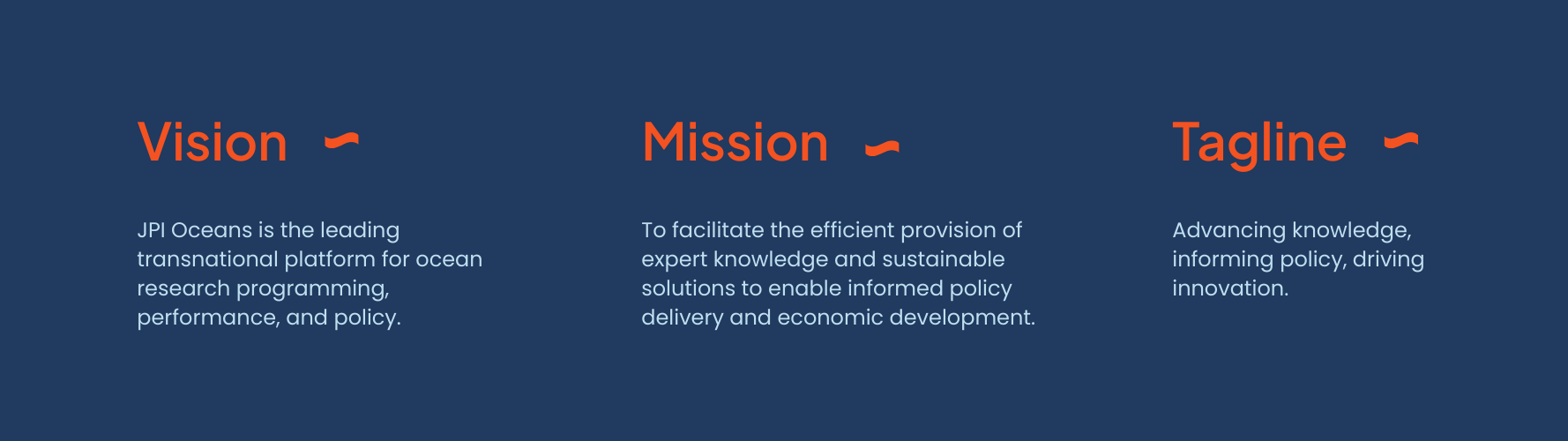
Many longstanding features remain, as JPI Oceans continues to focus on emerging priorities and areas where coordinated action across countries can generate knowledge and solutions that no single country could produce alone.
However, several elements have been sharpened or expanded. One notable change is the elevation of Ocean Stewardship and Governance as a superordinate topic alongside Ocean Health and Ocean Economy. This shift stems from the recognition that scientific findings alone are not sufficient; they must inform governance systems capable of steering social, economic, and ecological choices.
Another important development is JPI Oceans’ reinforced commitment to leading on frontier science. As an organisation, it aims to address scientific questions that fall beyond existing baselines; for example, in recent years, it has pioneered studies on offshore freshened groundwater as a potential resource or the ecological impact of changing light conditions in the ocean.
While European in its origin, the new Framework also signals JPI Ocean’s expansion to a more international dimension. The ocean is a shared system, and many challenges warrant that JPI Oceans’ model is employed beyond Europe. The Strategy encourages deeper ties with international partners and countries, basin-scale initiatives, and global networks. This expansion supports knowledge transfer as well as a coordinated vision on topics that benefit from collaboration.
In laying out JPI Oceans’ way of working, three principles emerge from the 2026-2030 Strategy Framework.
The first is an agile approach. JPI Oceans' agility in responding to emerging challenges and opportunities is a cornerstone of its approach. This agility is reflected in both the operational structure and programming flexibility, enabling a rapid response to evolving marine and maritime challenges. At the operational level, JPI Oceans can swiftly mobilise expertise and resources through streamlined processes for launching targeted initiatives. This includes the rapid formation of expert groups and the efficient roll-out of joint calls for proposals.
A second principle is variable geometry, a model central to JPI Oceans since its creation. This allows groups of member countries to participate in specific initiatives on a case-by-case basis according to their interests and capacities. Recent examples include clusters of countries collaborating on topics such as underwater munitions and blue carbon, with each group composed differently according to national priorities.
Third, the Strategy highlights activity co-design. This means that JPI Oceans’ primary stakeholders can give input to Joint Actions from the earliest stages, combining a top-down (from member countries) and bottom-up (from the broader community) approach. The goal is to ensure that activities are at once relevant and scientifically sound.
The Strategy Framework reinforces JPI Oceans’ commitment to supporting policy processes, including the European Ocean Pact, which has become a guiding thread for upcoming EU ocean-related policy instruments. By generating evidence, coordinating the expertise of member countries, and mobilising engagement and resources, JPI Oceans is well-positioned to help bring the Pact from political vision into practical execution.
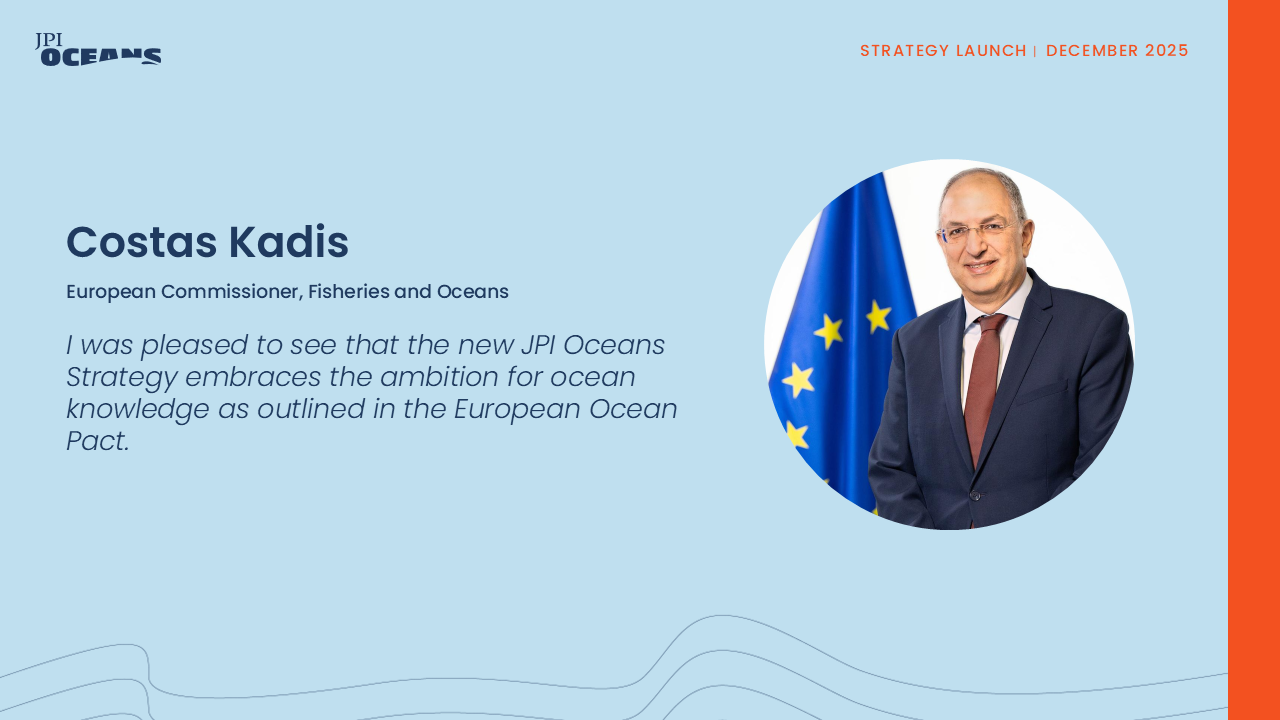
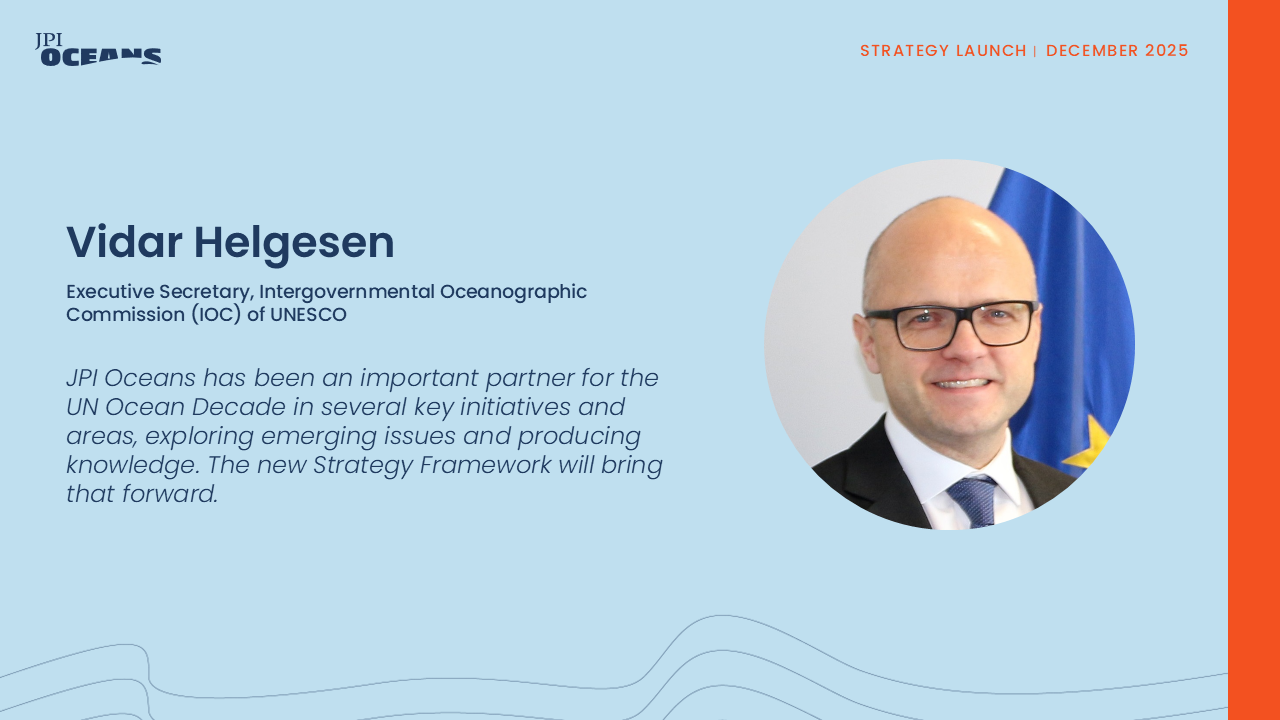
That was precisely the spirit of the Strategy launch event on 4 December, hosted by MEP Paulo do Nascimento Cabral and convened by the SEArica Intergroup. Paulo do Nascimento Cabral set the context from the middle of the ocean, the Azores islands. High-level speakers who followed included the European Commissioner for Ocean and Fisheries, Costas Kadis, and IOC-UNESCO’s Executive Secretary, Vidar Helgesen.
JPI Oceans Chair Peter Haugan presented the Framework together with Vice Chair Benjamin Kürten and Board representative Maria Azzopardi. A panel discussion brought together Peter Haugan, Vidar Helgesen, and Wiebke Pankauke, Deputy Head of Unit at the European Commission’s DG RTD, to exchange perspectives on research coordination, international collaboration in the context of the UN Ocean Decade, and the practical steps needed to implement the Pact.
The session concluded with remarks from MEP Thomas Bajada, offering another island perspective—in his case, from Malta. His speech illustrated JPI Oceans’ work in practice by echoing the recent launch of a Joint Call on Offshore Freshened Groundwater, proving that, as an organisation, JPI Oceans is more than ready to walk the talk.
Materials from the session, including JPI Oceans' presentation and the event photos, are available for download.